
Communications Practice
Strategic storytelling | Organizations | Events | Education + Training | Books + Articles | Practical Guides
Narrative texts in communications practice.
Organizational storytelling | Corporate storytelling | Strategic storytelling | Impact storytelling | Instrumentalized storytelling
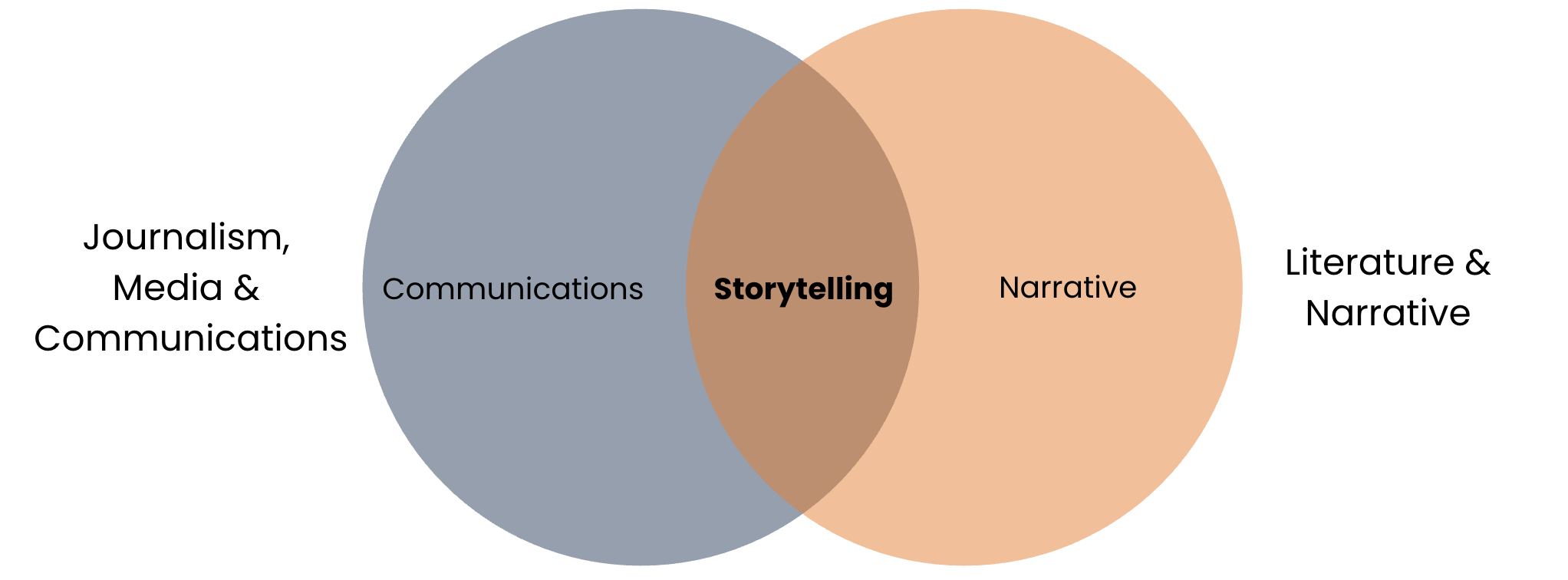
Communications practice evolves with the media — so when digital media data showed higher audience engagement with stories, storytelling became the new norm. Communication that might have been presented in a statement or report was now expected to be presented in a story, as well.
Narrative communications includes:
Personal Storytelling: stories about a person’s life that includes events relating to the activities of an organization. The objective is to demonstrate the impact of an organization’s work, or the importance of the issues the organization is working to impact.
Narrative Change: stories about a person’s life that includes events relating to a social issue that the organization is working to impact. The objective is to change public opinion on the social issue, and it is mostly practiced by nonprofits, social justice and social change organizations.
There is some confusion with terminology — about narrative — used in communications practice. As communicators have turned to narrative to produce more effective stories, they have adopted language from the study of narrative. However, “narrative” in communications practice usually references to “opinion”, rather than the elements of a narrative text. Learn more about terminology differences.
Strategic Storytelling
Telling stories — about real people — narrated by organizations.
The Storytelling Boom led to a new area of communications work: strategic storytelling.
Strategic storytelling is the practice of telling personal stories — about real people — to communicate information for an organization.
the story is about the life of a real person — either a member of the organization or a beneficiary of its activities
the story is narrated by the organization
the story is told by the subject (first-person) or by a spokesperson of the organization (third-person)
the story benefits the organization (generating ethical concerns)
Strategic storytelling is in service to a strategic plan, which impacts the narration of the stories.
Organizations








ASO Communications
Applying tools from cognition and linguistics, we uncover where people are capable of going and how to use our words, images and stories to move them.
Center for Climate Change Communication
George Mason University
Identifying new opportunities to enhance public understanding of climate change, and increase public engagement with climate solutions.
Center for Media & Social Impact
American University
A creative innovation lab and research center that focuses on media for equity and social justice.
Center for Public Interest Communications
University of Florida
Helping movements, foundations, agencies and organizations apply behavioral, cognitive and social science to build better communication strategies for the common good.
Center for Social Impact Communication
Georgetown University
A research and action center dedicated to increasing social impact through the power of marketers, communicators, fundraisers and journalists working together.
Center for Story-Based Strategy
A national (USA) organization offering training and consulting to harness the power of narrative for social change.
IMIX
A UK nonprofit supporting the migration and refugee sector to communicate with confidence, clarity and care.
International Resource for Impact and Storytelling (IRIS)
IRIS’ story-centered initiatives build networks and gathering spaces internationally to exchange knowledge, share strategy and build skills in storytelling and narrative shift to benefit communities.
The Radical Communicators Network
The Radical Communicators Network is a global cohort of more than 5,000 communicators to cross-pollinate conversations across a variety of movements, organizations, levels of experience, geographies, languages, and political associations.
The RadComms Resource Directory is a rich list of resources for members of RadComms.
StoryCenter
StoryCenter is an innovative participatory media organization committed to the power of personal narratives for equity, wellness and social action.
Events

frank
Center for Public Interest Communications at University of Florida
A conference connecting communicators, scholars, storytellers and activists working to build the world we wish existed.
STORY
A global gathering of creators, leaders and change-makers working in a variety of industries to shift narrative sand shape the future by telling stories that matter.
Story Movements
Center for Media & Social Impact
Story Movements is a biennial CMSI convening that curates and presents research and case studies about the role of narrative in contemporary movements for social justice.
The Power of Narrative
Boston University College of Communication
An annual conference for writers, editors and lovers of narrative non-fiction.
Education + Training

Center for Public Interest Communications at University of Florida
Training in Public Interest Communications
Science Communications Course
Center for Social Impact Communication at Georgetown University
Spitfire Strategies
Center for Story-based Strategy
Books + Articles
By Academics
By Practitioners
Fernandes, Sujatha
Curated Stories: The Uses and Misuses of Storytelling, 2017.
Mäkelä, Maria and Hanna Meretoja
Critical Approaches to the Storytelling Boom, 2022.
Polletta, Francesca, Tania DoCarmo, Kelly Marie Ward and Jessica Callahan
Personal Storytelling in Professionalized Social Movements, 2021.
Shuman, Amy
Other People’s Stories: Entitlement Claims and the Critique of Empathy, 2005.
Squire, Corinne (Ed)
Stories Changing Lives: Narratives and Paths toward Social Change, 2020.
Matthews, Shanelle and Marzena Zukowska
Liberation Stories: Building Narrative Power for 21st Century Social Movements, 2025.
Mayotte, Cliff and Claire Kiefer (Eds)
Say It Forward: A Guide to Social Justice Storytelling, 2018.
Namiba, Angelina, Charity Nyirenda, Memory Sacbhikonye, Rebecca Mbewe and Winnie Ssanyu Sseruma
Our Stories Told By Us: Celebrating the African Contribution to the UK/HIV Response, 2023.