
The Narrative Ecosystem
People + organizations involved in the study, production and use of narrative texts.
Studying Stories
Narrative scholars
Narratologists
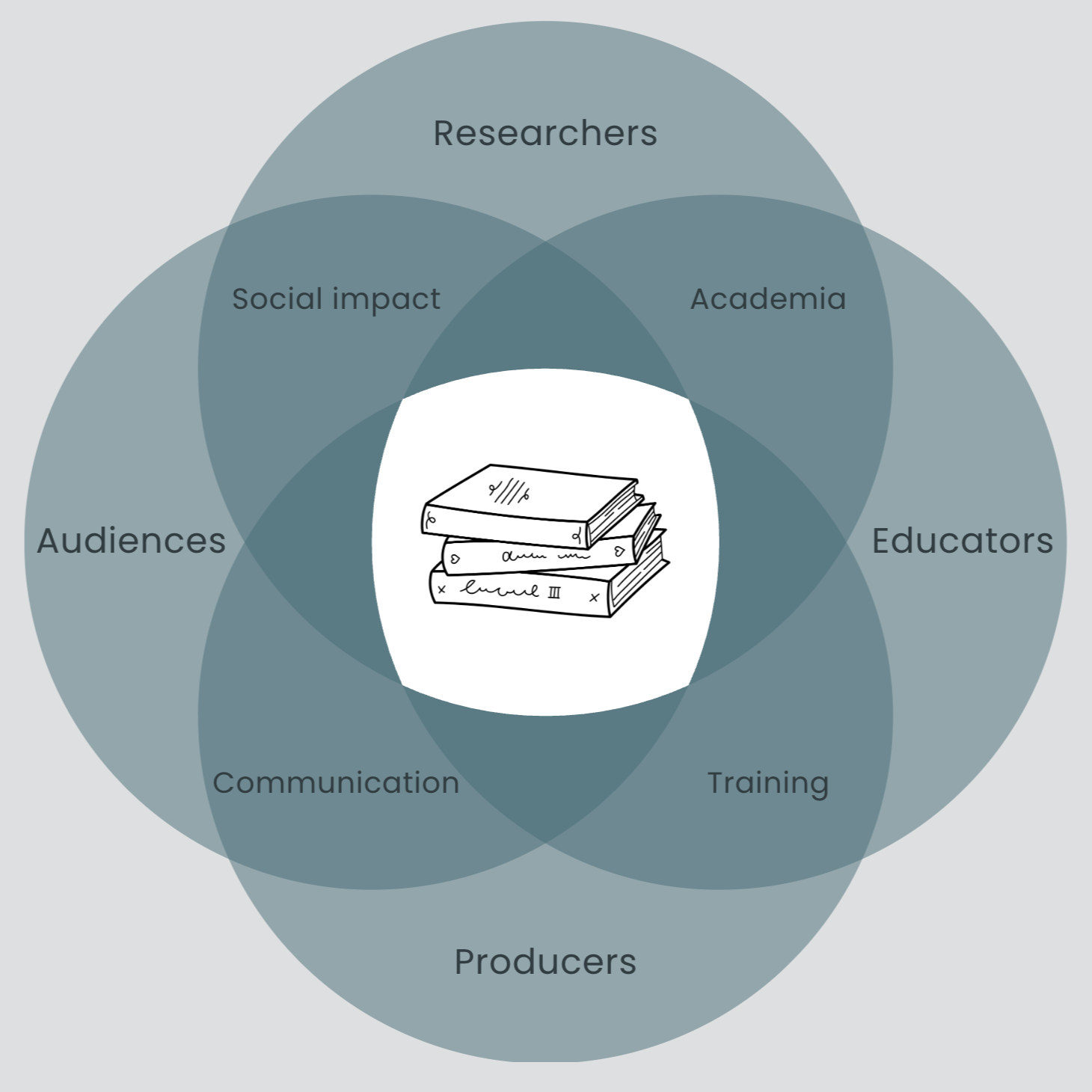
Producing Stories
Communications professionals
People
Narratologist: Someone who studies narrative texts.
Narrative researcher: Someone who collects narrative texts (usually oral) and studies them, such as interviewing asylum seekers and analyzing the collected narrative texts.
Storytelling: Someone with expertise in the art of telling stories (for entertainment or professional public speaking).
Strategic Storytelling: Communications professionals who use storytelling as part of their communications strategy.
Teaching communicators to incorporate narrative into their communications strategy.
Teaching communicators or spokespeople to tell stories that are persuasive.
Training communicators to practice ethical storytelling.
Universities
Nonprofit funders + think tanks
Nonprofits + social change organizations
Communications agencies
Providing education in narrative theory, narratology and communications.
Sponsoring research projects about — or intersecting with — narrative.
Funding and distributing research to inform more effective strategic storytelling by nonprofits.
Including strategic storytelling in their communications activities.
Employing narrative change as a social change strategy.
Publishing their internal storytelling practices and policies to share expertise among practitioners.
Producing narrative texts for companies and nonprofits, for a fee.
Narrative Texts
Therapy patient’s life story
Stories narrated by an organization or corporation. These stories are told as part of the organization’s communications work, as “strategic storytelling”, and can include news articles, social media posts and public speaking events.
Stories narrated by a therapy patient to their therapist, about their life.