
The Storytelling Boom
Instrumentalized storytelling in the public sphere.
What is the storytelling boom?
Everyone is talking about narrative: the media narrative, false narratives, alternate narratives, my narrative.
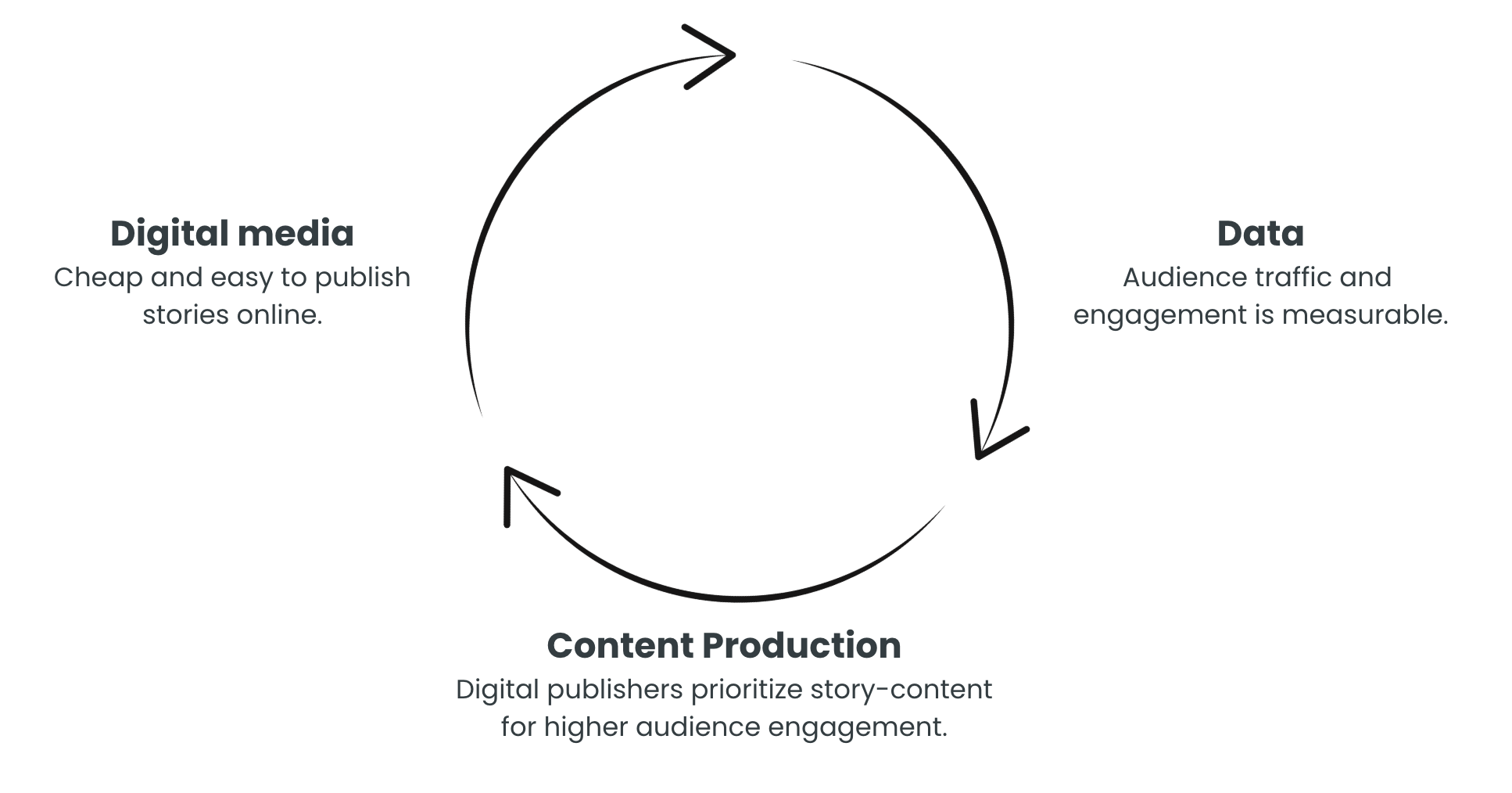
When digital media made publishing stories cheap and easy, more and more information was published as a story. People like stories, so that content had more engagement, which led to more content being published as as story…. creating the storytelling boom.
Stories were once firmly situated in entertainment and advertising, but storytelling has now been normalized as a form of communication within professional communications — and today’s leaders are expected to be storytellers, too.
The academic terminology for this use of story is “instrumentalized storytelling”: using stories as a strategic instrument.
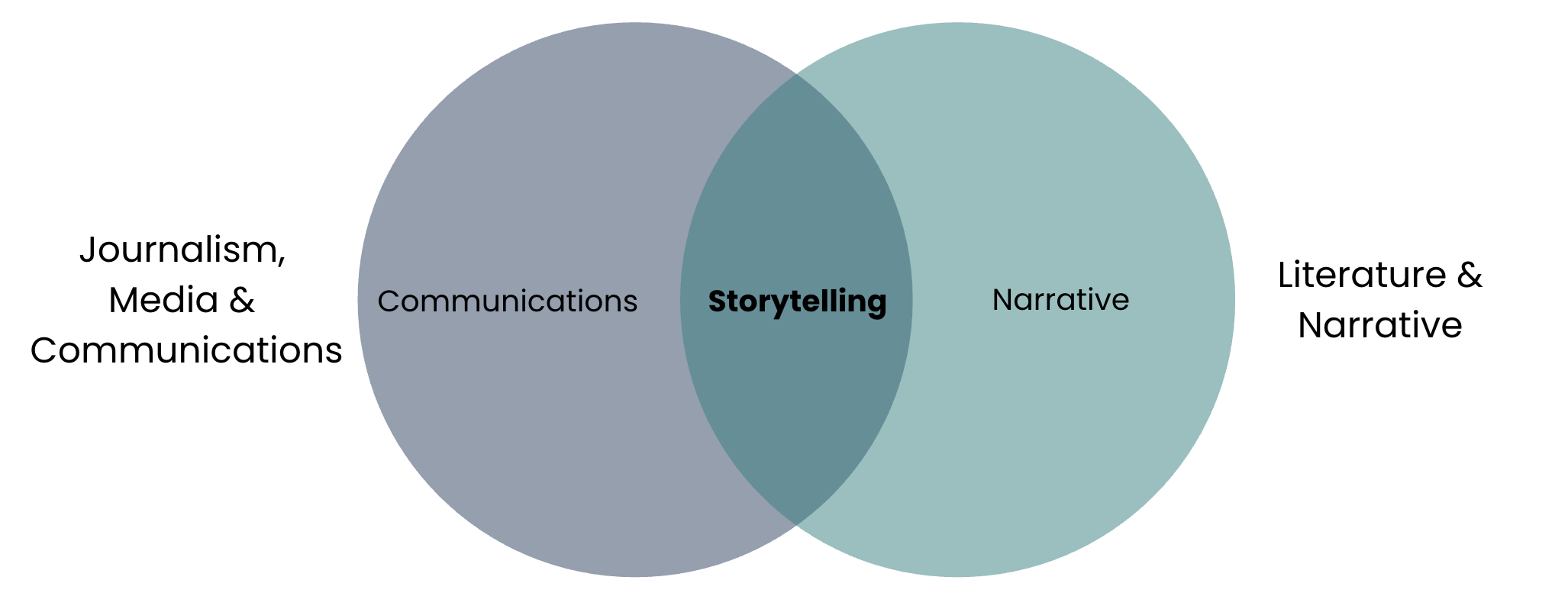
The storytelling boom sits at the intersection of narrative and communications practice.
How did we get here?
When digital media and Web 2.0 made it cheap and easy to publish stories online, content-creators — from advertisers to bloggers — saw that stories captured audiences more than other types of content.
Digital publishers prioritized publishing stories to capture audiences; audiences engaged online with stories; digital media data reflected higher engagement with stories… and so it goes.
Strategic storytelling
Telling stories — about real people — narrated by organizations.
Strategic storytelling is the practice of telling stories about real people to communicate information for an organization.
the story is about the life of a real person — either a member of the organization or a beneficiary of its activities
the story is narrated by the organization
the story is told by the subject (first-person) or by a spokesperson of the organization (third-person)
the story is in service to the organization (e.g. fundraising, marketing or publicity)
Strategic storytelling is in service to a strategic plan, which impacts the narration of the stories.
“‘Narratives are everywhere’ was once the triumphant slogan of narrative scholars, but now we are starting to realize that this pervasiveness might in fact be a problem.” - Maria Mäkelä and Hanna Meretoja, Critical Approaches to the Storytelling Boom.
A story-critical approach to the storytelling boom.
What are the downsides to storytelling in the public sphere?
As storytelling in the public sphere has grown, criticism of instrumentalized storytelling has emerged.
Critical Approaches to the Storytelling Boom by Maria Mäkelä and Hanna Meretoja
Storytelling: Bewitching the Modern Mind by Christian Salmon
My Story, Your Narrative by Maria Mäkelä and Samuli Björninen
Curated Stories: The Uses and Misuses of Storytelling by Sujatha Fernandes
Instrumental Narratives: The Limits of Storytelling and New Story-Critical Narrative Theory, a research project that ran out of the University of Tampere 2018-2022.